Two-Voiced Gesture-Controlled Electrolarynx (TVGCEL)
An experimental wearable instrument exploring an unconventional approach to voice restoration by allowing a performer to produce two independently controlled voices simultaneously.
About the Instrument
Developed as a tangent to Bryce Irvin's master's research on natural voice singing restoration with an external prosthesis at the Georgia Institute of Technology, the Two-Voiced Gesture-Controlled Electrolarynx explores an unconventional approach to voice restoration. Instead of reproducing a single natural-sounding voice, the instrument allows its user to sing with two independently controlled voices simultaneously.
The wearable prototype is embedded in a cargo vest, with two surface transducers positioned against the neck inside the vest's collar. Each transducer carries an independently generated audio signal, allowing the performer to shape two voices through the vocal tract.
Technical Design
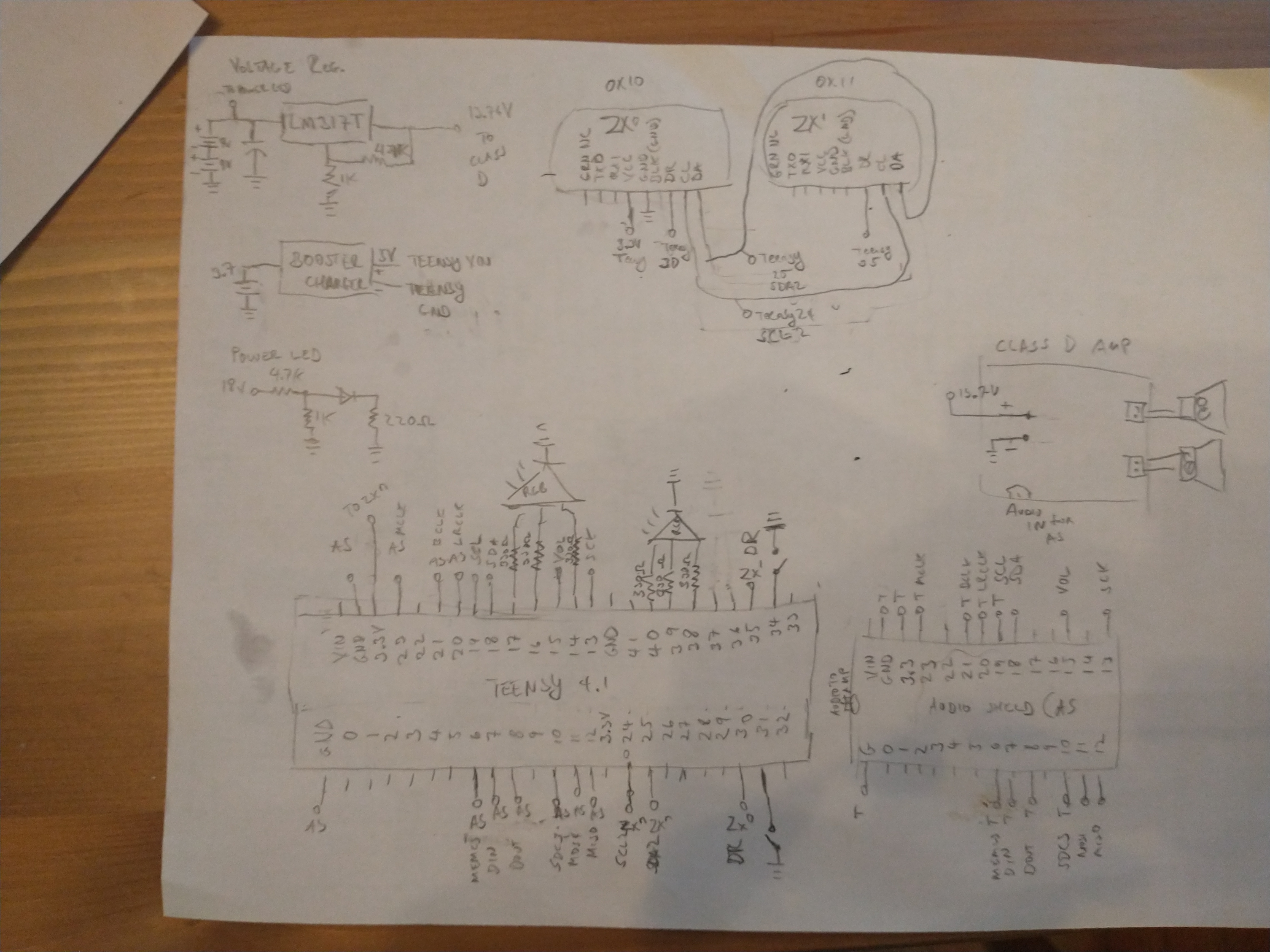
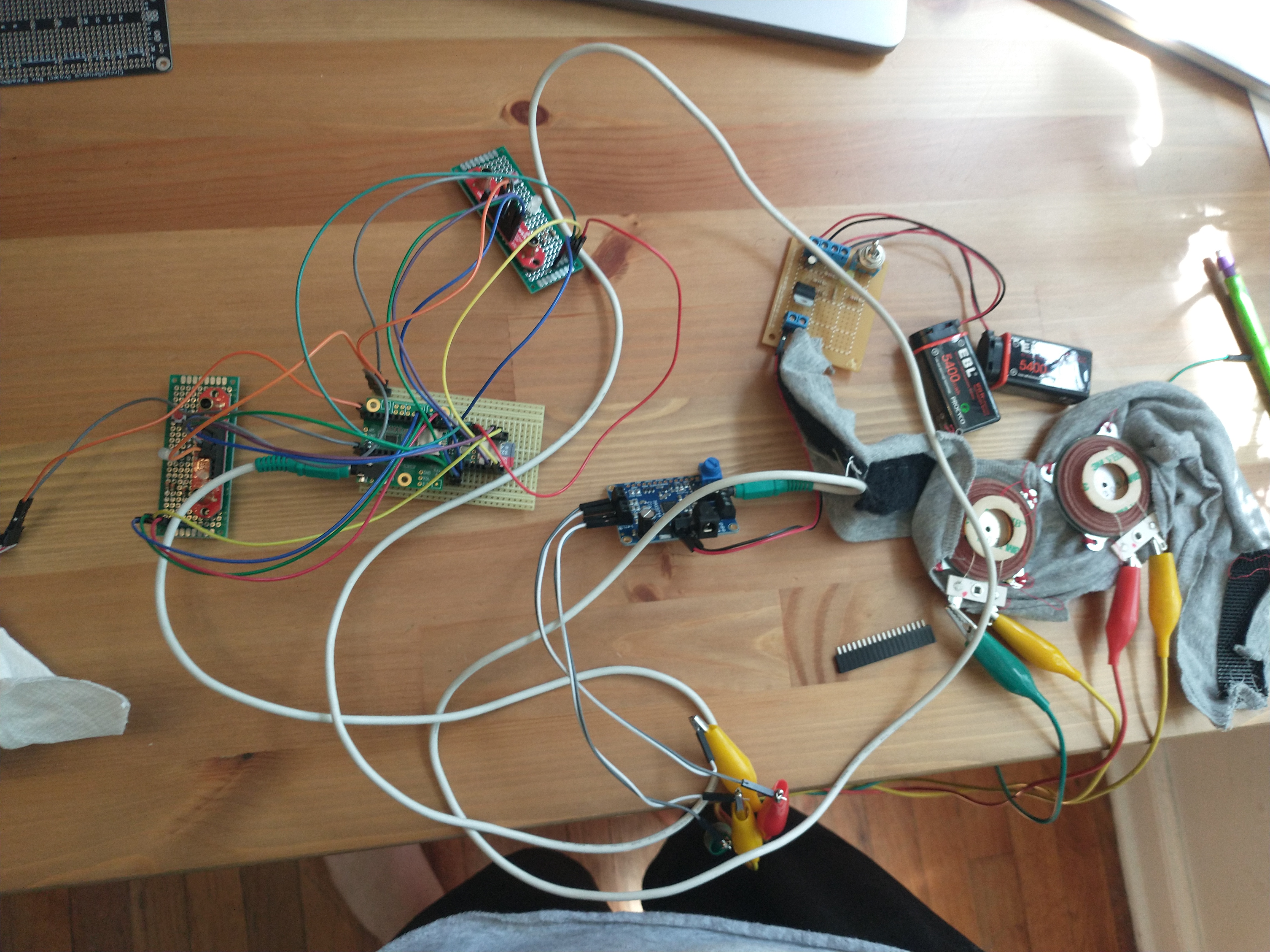
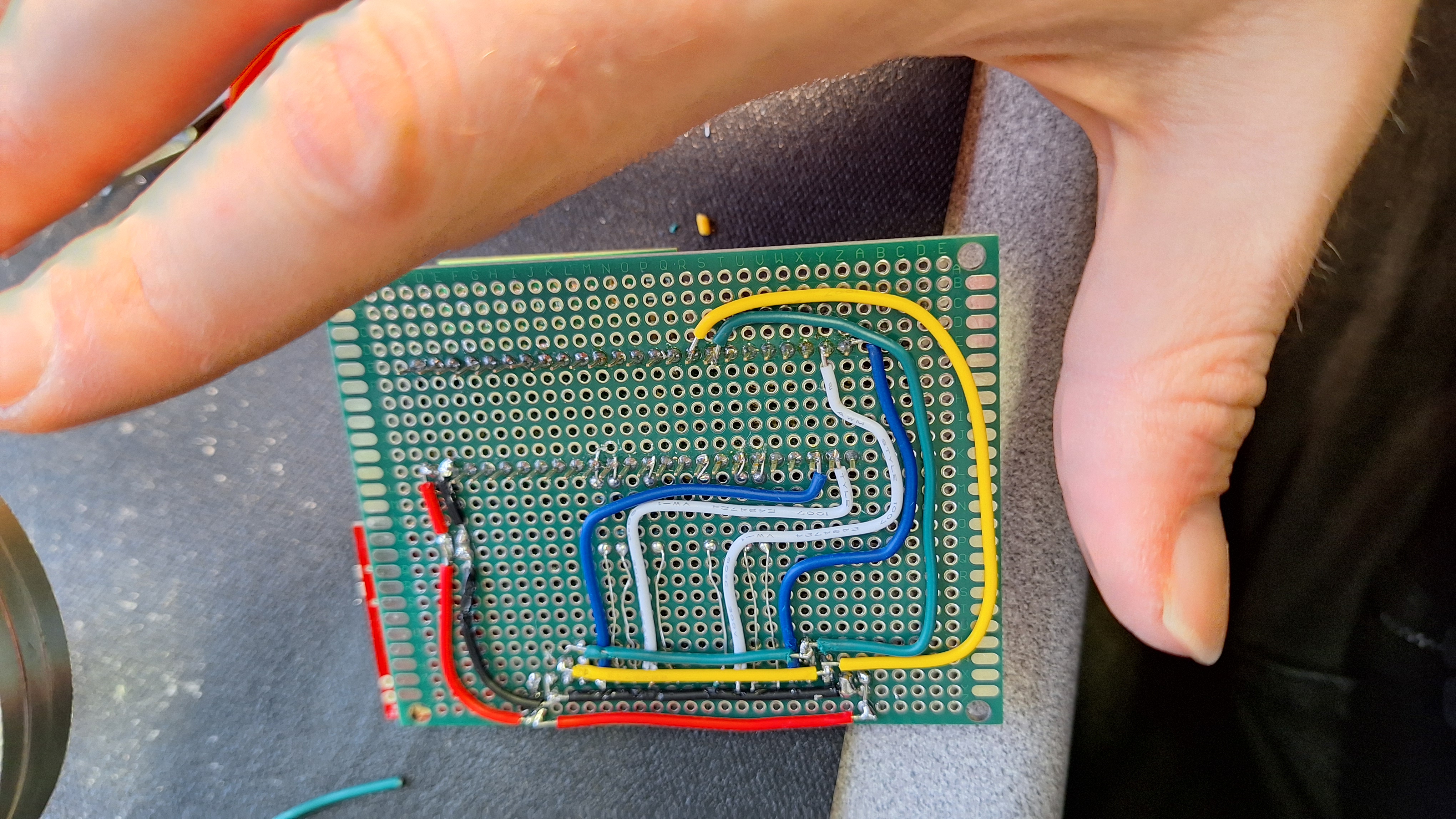
The instrument uses a Teensy 4.1 microcontroller for sensor processing, scale mapping, and audio generation. Two infrared distance sensors independently control the onset, offset, and pitch of the two voices.
Each voice can be mapped to different musical scales and intonations. Customizable presets allow the performer to switch between configurations using a button on the instrument. A separate Theremin Mode provides continuous pitch control for each voice independently.
Waveform generation and scale mapping are implemented on the Teensy 4.1. The two audio signals are transmitted over I2S to a stereo Class D amplifier, which drives the independent transducers mounted within the vest collar.
Performance & Presentation History
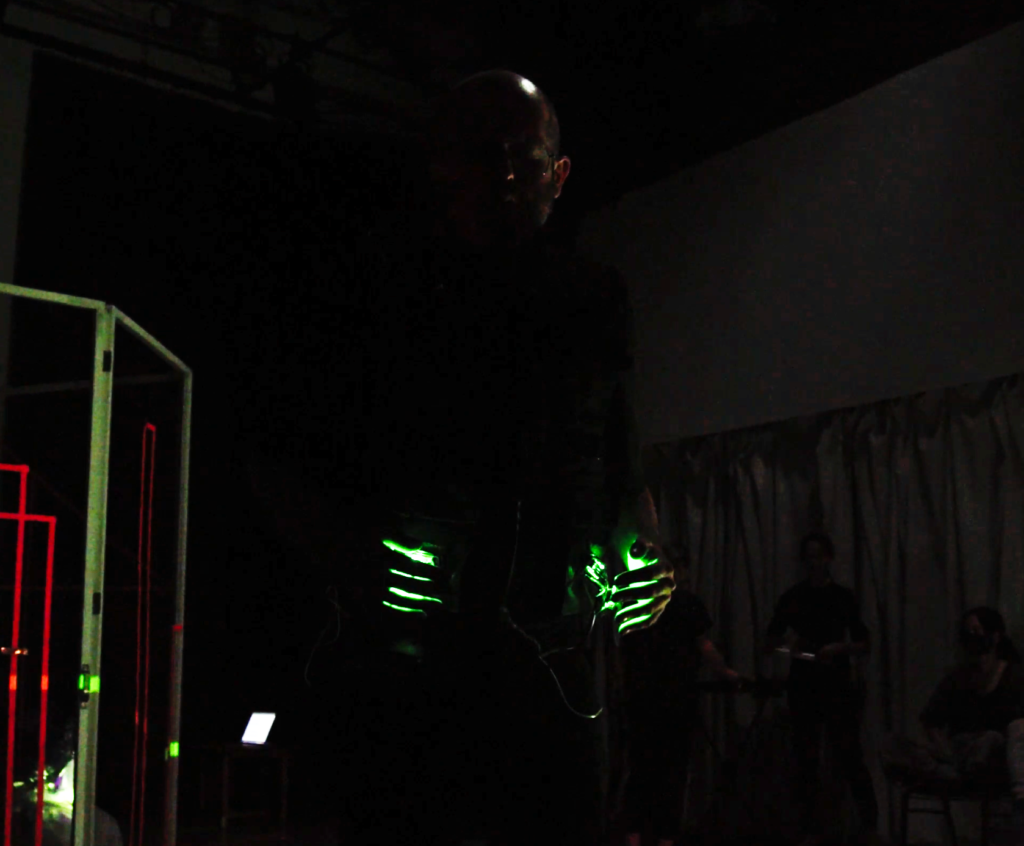
The embedded vest prototype debuted as part of the Phase 1 showing ofCommunity Emotional Sound Light Organism(CELSO), a collaborative performance project developed with Driven Arts Collective.
I also presented the instrument atReembodied Sound 2024, a symposium and festival of transducer-based music and sonic art held at EMPAC, Rensselaer Polytechnic Institute, February 2–3, 2024.